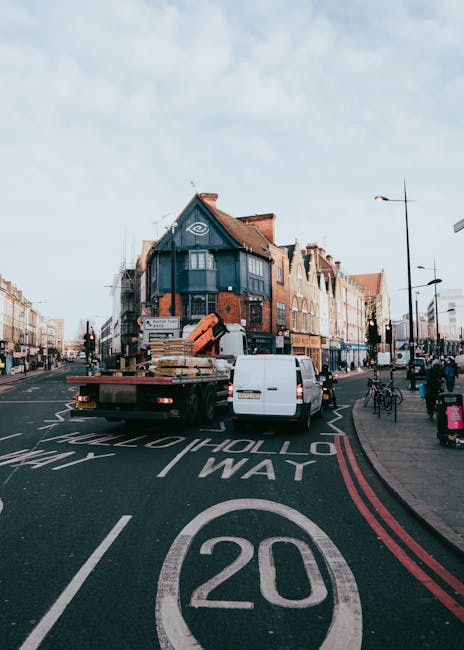
Islington removals price guide 2026 real cost
If you are trying to work out the Islington removals price guide 2026 real cost, you are probably in that slightly frazzled stage where the boxes are piling up, the flat feels smaller by the hour, and every quote seems to tell a different story. Fair enough. Moving in Islington is rarely straightforward. Narrow staircases, parking controls, lift access, and busy streets can all push the final bill up or down in ways that are not obvious at first glance.
This guide breaks down what actually affects removals pricing in Islington, how real costs are usually built, and where people often get caught out. You will get a practical view of the numbers, not sales fluff. And yes, we will also cover the awkward bits: hidden fees, access issues, packing, storage, and the difference between a simple van job and a full moving service.
Let's make the pricing less mysterious. Because honestly, once you understand the moving parts, it gets a lot easier to compare quotes and spot a fair deal.
Table of Contents
- Why Islington removals price guide 2026 real cost matters
- How Islington removals price guide 2026 real cost works
- Key benefits and practical advantages
- Who this is for and when it makes sense
- Step-by-step guidance
- Expert tips for better results
- Common mistakes to avoid
- Tools, resources and recommendations
- Law, compliance, standards, or best practice
- Options, methods, or comparison table
- Case study or real-world example
- Practical checklist
- Conclusion
- Frequently asked questions
Why Islington removals price guide 2026 real cost Matters
Price matters for obvious reasons, but in Islington it matters in a very local way. This is not a district where removals pricing is determined by a single neat formula. A two-bedroom flat near Angel may look similar on paper to one in Highbury, yet the real cost can change because of access, waiting time, parking, loading distance, or whether the crew has to carry sofas down a tight staircase with no lift. That kind of thing adds minutes, then hours, and suddenly the quote looks different.
The reason a price guide is useful is that it gives you a sense of what is normal and what is not. If a quote is suspiciously low, there is usually a catch. If it is very high, you want to know why. Are you paying for packing? Dismantling? Storage? Evening work? A bigger van? A second mover? These details are where the real cost lives.
For local moves, knowing the likely price range also helps you plan the moving day itself. You can budget properly, book parking if needed, and avoid that last-minute scramble where someone is stood on the pavement at 7 a.m. holding a kettle and wondering why the van still has not arrived. Not ideal.
Practical takeaway: in Islington, the cheapest quote is not always the cheapest move. The real cost depends on access, volume, timing, and how much work the crew is actually doing.
How Islington removals price guide 2026 real cost Works
Most removals quotes in Islington are built from a few core components. Once you know those, the pricing starts to make sense.
1. Time or fixed scope
Some moves are priced by the hour, especially smaller jobs such as a man and van service or a partial flat move. Others are priced as a fixed job after the company understands the property size, contents, access, and route. Both can be fair. The key is whether the quote reflects the real amount of work.
2. Labour
The number of movers matters. A one-person van is cheaper than a two- or three-person team, but slower lifting can backfire if you have heavy items or awkward access. In a tall Islington townhouse or a compact Victorian conversion, an extra pair of hands can save time, stress, and the sort of back pain that makes you regret life choices.
3. Vehicle size
A small removal van is fine for a light move or student removals. A larger van or truck is needed for family homes, offices, or multiple heavy pieces. If the vehicle is too small, the team may need to make multiple trips. That sounds manageable until you realise it adds fuel, labour, and time.
4. Access and logistics
This is a big one in Islington. Things like narrow streets, basement flats, parking restrictions, long carries from the property to the van, and no lift access all influence the total cost. The best removal companies will ask these questions early because they know the difference between "easy load" and "we are circling the block while the clock runs".
5. Extra services
Packing, unpacking, furniture dismantling, storage, piano handling, or specialist packing materials can all be added on top. These are useful services, but they should be visible in the quote. If they are not, ask.
To be fair, the best pricing conversations usually happen before moving day, not during it. That is where clear questions save money.
Key Benefits and Practical Advantages
A good removals price guide is not just about saving a few pounds. It helps you make smarter choices, and that often matters more than the headline figure.
- Better budgeting: you can plan around the likely real cost instead of guessing.
- Cleaner comparisons: you can compare quotes on like-for-like terms.
- Fewer surprises: you are less likely to be hit with unexpected charges on the day.
- More suitable service choice: you can decide between a man and van, full removals, or storage support.
- Reduced stress: when the numbers are clearer, the move feels more manageable. Simple, but true.
Another benefit people overlook is timing. If you understand what drives the cost, you can choose the most sensible date and service combination. For example, if you only have a small amount to move, a flat removals service or a local van hire style option may be enough. If you have a large family move with furniture, packing, and awkward access, paying for a more complete service can actually be the more sensible value choice.
Who This Is For and When It Makes Sense
This guide is useful for anyone moving within or from Islington, but a few groups will get the most value from it.
Homeowners and renters
If you are moving from a flat, maisonette, terrace, or converted building, you need a clearer sense of the likely costs before you commit. Islington homes often have access quirks that affect pricing more than people expect.
Families moving a full household
If you have furniture, white goods, children's bits, boxes of everyday life, and the usual "where did all this come from?" feeling, a full removal service may be better than a basic van booking. Families usually need help with packing, timing, and careful handling.
Students and sharers
Student removals and shared flat moves often look small, but can get messy fast if several rooms are involved. A quick, low-cost option may work, but only if access is straightforward and the load is light.
Small businesses and office moves
Office removals in Islington need tighter coordination because downtime matters. A business move might need evening work, careful labelling, and a larger team so the move does not eat into trading time.
Anyone trying to compare quotes
If you already have two or three quotes and they are all over the place, this guide helps you decode them. Sometimes the difference is legitimate. Sometimes one quote just leaves out things that matter.
Step-by-Step Guidance
Here is a simple way to approach removals pricing without getting overwhelmed.
- List what needs moving. Count the big items first: beds, wardrobes, sofas, tables, appliances, desks, and anything fragile or awkward.
- Check access at both addresses. Note stairs, lifts, parking, distance from road to door, and whether a van can stop nearby.
- Decide what help you actually need. Do you want packing, dismantling, unpacking, or storage? Be honest here. Half-packed moves often become expensive because they are rushed.
- Get a written quote. Make sure the quote says what is included and what is not. This matters more than a vague "best price" promise.
- Compare the full picture, not just the total. One company may include wrapping, while another charges separately. One may have a smaller team, which looks cheaper until the move takes all day.
- Ask about parking and waiting time. In Islington, that can be a real issue. If parking is tight, the cost and logistics should reflect that.
- Confirm the timing. Morning, evening, weekend, and end-of-month bookings can all affect availability and sometimes pricing.
- Prepare the property. Clear corridors, protect floors if needed, and keep essentials aside. A smooth start usually saves time, which saves money.
If you are planning ahead, it is also worth looking at a few related services such as pricing and quotes, removal services, and packing and unpacking services so you can see what level of support matches your move.
Expert Tips for Better Results
Most removal costs become easier to manage when you think like the crew for a moment. What slows a move down? What causes repeated lifting? What creates avoidable delays? That is where the savings are.
- Be precise about access. If the flat is on the third floor with no lift, say so early. Do not assume it is obvious.
- Separate the fragile from the awkward. A mirror, a TV, and a heavy wardrobe do not travel the same way.
- Declutter before getting quotes. The less you move, the lower the real cost. Obvious, yes, but people forget.
- Use proper packing materials. Weak boxes and under-taped bottoms can lead to damage, extra handling, or both.
- Book early for busy dates. Fridays, month-end, and school holiday periods can be tighter for availability.
- Ask what happens if the job takes longer. You want clarity on overtime, extra labour, and delays before anyone loads the van.
One small but useful tip: if you are moving around Upper Street, Angel, or one of the busier local roads, build in a little extra time. Traffic, loading, and parking can be less predictable than you hope. Not catastrophic, just London being London.
Common Mistakes to Avoid
The same pricing mistakes come up again and again. They are easy to make, which is why they are worth flagging.
- Choosing on price alone. The lowest quote can miss key services or underestimate access problems.
- Not declaring awkward access. A basement flat, tight staircase, or long carry can change the job significantly.
- Forgetting about parking controls. In Islington, this can turn into a real headache if not planned properly.
- Leaving packing too late. A half-packed move often means more labour, more stress, and more risk of damage.
- Assuming storage is included. It often is not. Storage should be quoted separately if needed.
- Ignoring the fine print. If a quote looks unusually clean, check whether VAT, waiting time, fuel, or dismantling are excluded.
There is a simple truth here: the more complete the information you give upfront, the more accurate the price is likely to be. That is good for everyone.
Tools, Resources and Recommendations
You do not need a pile of specialist tools to understand removals pricing, but a few basic things help a lot.
- Inventory list: make a room-by-room list of what is moving.
- Phone photos: take clear images of access points, staircases, and bulky items if a visual check is useful.
- Measured notes: write down the dimensions of large furniture if there is any doubt about fitting or handling.
- Calendar: note the moving date, parking restrictions, and key handover times.
- Box labels: mark fragile boxes, room names, and priority items like kettle, chargers, and bedding.
If you need a broader service view, these pages can help you match the move to the right solution: man and van, house removals, flat removals, and storage. For larger or heavier moves, piano removals and furniture removals are worth a look too.
Law, Compliance, Standards, or Best Practice
Removals pricing itself is commercial rather than regulated in a fixed national way, but there are still important best-practice areas to pay attention to. That is especially true when money, access, and property damage are all in play.
First, ask whether the company is clear about insurance and safety. You want to know how goods are handled, what cover exists, and what procedures are followed if something goes wrong. A professional mover should be able to explain this in plain English without sounding vague or defensive. If they cannot, that is not a great sign.
Second, check that the quote and terms are clear about payment, cancellation, waiting time, and extra charges. A good removals company should be transparent about the cost structure. This is where trust is built. Not in fancy wording, but in the boring bits done properly.
Third, think about health and safety on the day. Heavy lifting, narrow stairs, wet pavements, and awkward furniture all create risk. Good preparation reduces that risk, and good communication helps even more. If you want to understand the company's approach, pages like health and safety policy, insurance and safety, and terms and conditions can give you a better feel for the standards behind the service.
Best practice also includes honest quoting. If a company needs more details before giving a firm number, that is usually a good sign, not a bad one. It means they are trying to avoid surprises later. And yes, it can feel a bit tedious while you are planning, but it saves trouble. Usually.
Options, Methods, or Comparison Table
Different move types suit different budgets. The table below gives a practical overview of common options and how they tend to behave on price and convenience.
| Option | Best for | Typical cost shape | Main pros | Main watch-outs |
|---|---|---|---|---|
| Man and van | Small loads, short local moves, student moves | Often hourly or half-day based | Flexible, usually economical | Can be slower for large or awkward loads |
| Full house removals | Whole-home moves, family relocations | Often fixed or estimate-based | More complete support, less stress | Higher headline price, but usually more efficient |
| Office removals | Small business or commercial moves | Depends on timing and equipment | Can reduce downtime | Needs tighter planning and coordination |
| Storage-supported move | Gap between properties, decluttering, delayed access | Move cost plus storage cost | Useful flexibility | Extra cost if storage lasts longer than planned |
If you are unsure which option fits, compare what you actually need rather than what sounds cheapest on paper. Sometimes a slightly larger service is better value because it reduces loading time, protects your furniture, and keeps the day on track.
Case Study or Real-World Example
Picture a fairly typical Islington move: a two-bedroom flat near a busy main road, with a sofa, double bed, desk, dining table, several boxes, and a few fragile items. The access is decent but not perfect. There is no lift. Parking is tight. The move is not huge, but it is not a quick chuck-it-in-the-van job either.
In that kind of situation, the real cost depends on how the quote is built. If the company only prices the van and one mover, the job might look cheap at first. But if the stairs are steep and the furniture is bulky, the move could take longer than expected. If the company provides two movers, wrapping, and a clearer loading plan, the cost may be higher but the day may run more smoothly.
What usually surprises people is not the base rate. It is the extra time caused by small things: carrying boxes down in batches, waiting for a parking space, moving items around to protect walls, and navigating the odd awkward corner that somehow makes every piece of furniture seem twice as large. Truth be told, that is where the real cost hides.
In a more organised version of the same move, the customer has already sorted boxes, labelled everything, reserved parking where possible, and told the removals team about the stairs and access. The move is smoother, shorter, and often cheaper in practice because the crew is not paying the "surprise tax". That is not an official term, of course, but you know what I mean.
Practical Checklist
Use this before booking your move. It keeps the quote accurate and the day calmer.
- List all furniture and boxes room by room.
- Note if there is a lift, and whether it is large enough for furniture.
- Confirm the number of floors at both addresses.
- Check parking restrictions and loading space near both properties.
- Measure large or awkward items.
- Decide whether you want packing help.
- Ask about dismantling and reassembly.
- Ask whether waiting time or extra labour may be charged.
- Confirm whether insurance and safety procedures are included in the service.
- Get the quote in writing and read the terms carefully.
If you have a moment the night before, put essentials in one clearly marked bag: kettle, medication, chargers, documents, snacks, and a change of clothes. It sounds small, but on moving day it feels like luxury.
Get a free quote today and see how much you can save.
Conclusion
The real cost of removals in Islington in 2026 comes down to more than just distance from A to B. Access, parking, timing, labour, vehicle size, and extra services all play a part. Once you understand those pieces, quotes become much easier to compare and the moving process feels a lot less intimidating.
If you take one thing from this guide, let it be this: ask detailed questions early, compare like for like, and do not be rushed by a low headline figure. The right move is not always the cheapest one, but it is usually the one that is clear, well-planned, and suited to the property. That is what tends to save money in the end.
And if you are still at the stage of staring at boxes and wondering where to start, that is completely normal. One step at a time. Really, that is enough.
Frequently Asked Questions
How much does a removals service in Islington usually cost in 2026?
The real cost depends on property size, access, distance, and the level of service you need. A small local move may be relatively modest, while a full household move with packing and difficult access will cost more. The safest approach is to request a written quote based on your exact circumstances.
Why do Islington removals quotes vary so much?
Quotes vary because no two moves are identical. Stairs, parking, loading distance, lift access, furniture volume, and timing all affect the final price. Some quotes also include packing or dismantling, while others do not, which can make them look cheaper than they really are.
Is a man and van cheaper than full removals?
Usually yes for smaller jobs, but not always for bigger or more complicated moves. A man and van can be cost-effective for a light load, a single flat, or student removals. For larger homes or awkward access, a fuller service may actually be better value because it reduces time and effort.
What hidden costs should I ask about?
Ask about waiting time, parking issues, long carries, stairs, dismantling, reassembly, packing materials, and storage. These are the most common extras that affect the real bill. A transparent company should explain them clearly before the move.
Does parking make a big difference to removals pricing in Islington?
Yes, it can. Islington parking controls and limited loading space can slow down a move, especially if the van cannot stop close to the property. That extra time can increase labour costs, so it is worth discussing parking arrangements early.
Should I choose the cheapest quote?
Not automatically. The cheapest quote can be fine, but only if it includes the same level of service as the others. Compare what is included, how many movers are provided, and whether the company understands your access details. Cheap and clear is great. Cheap and vague is less great.
Is it worth paying for packing help?
If you are short on time, moving fragile items, or trying to reduce stress, packing help can be worth it. It also helps keep the move more organised. For some people it feels like an extra cost; for others it is the difference between chaos and a manageable day.
Can I reduce the cost of my move without cutting corners?
Yes. Declutter first, pack early, label boxes clearly, give accurate access details, and book at a sensible time. Those steps can lower the actual work involved, which often helps reduce the final cost without affecting quality.
Do storage needs change the price a lot?
They can. If you need storage, the cost usually becomes a combination of removal work plus storage charges. Short-term storage may be manageable, but longer periods add up, so it is worth checking how long you realistically need it for.
What should be included in a proper removals quote?
A proper quote should explain the service level, the number of movers, vehicle size, any packing or dismantling, expected timing, and any possible extras. If a quote is unclear, ask for it to be broken down. That is not being difficult; that is being sensible.
How far in advance should I book a removal in Islington?
As early as you can, especially if you are moving at month-end, on a weekend, or during a busy season. Early booking gives you more choice and usually makes planning easier. For a straightforward move, a little lead time goes a long way.
What if my move ends up taking longer than expected?
Ask in advance how overtime or extra labour is charged. This is important because access problems, traffic, or last-minute changes can add time. A good provider will explain the process clearly so there are no awkward surprises on the day.